The Ananda resting on the ground and being checked to make some improvements. I found it very useful to install a quick inspection round cap on the main lid that closes the first cockpit since it remains closed with stainless steel bolts when I sail avoiding the splash of the water inside. The inspection cap allows me to save something quickly and it is also useful to take out the anchor line if necessary.
I also took advantage of varnishing again the akas and everything that was made of wood.
Sunday, September 27, 2015
Monday, August 10, 2015
The Camotal
The camotal is a small strip of land between La Punta and San Lorenzo Island, it is said to be a remnant of the old port of Callao, which was destroyed by an earthquake and subsequent tsunami in 1746. But the truth is that it is a small island formed of sand and stones generated by the encounter of the tides coming from the south and the north. In summer, it is frequented by surfers. For my luck I had a very calm day and low tide which gave me the ability to go down and take some pictures, it hurts that the camera came back wet and moistened the film losing several photos. Most photos in this blog they are made analogically with a roll of 35 mm because I am a fan of this type of photography.
Thursday, July 16, 2015
Night Navigation
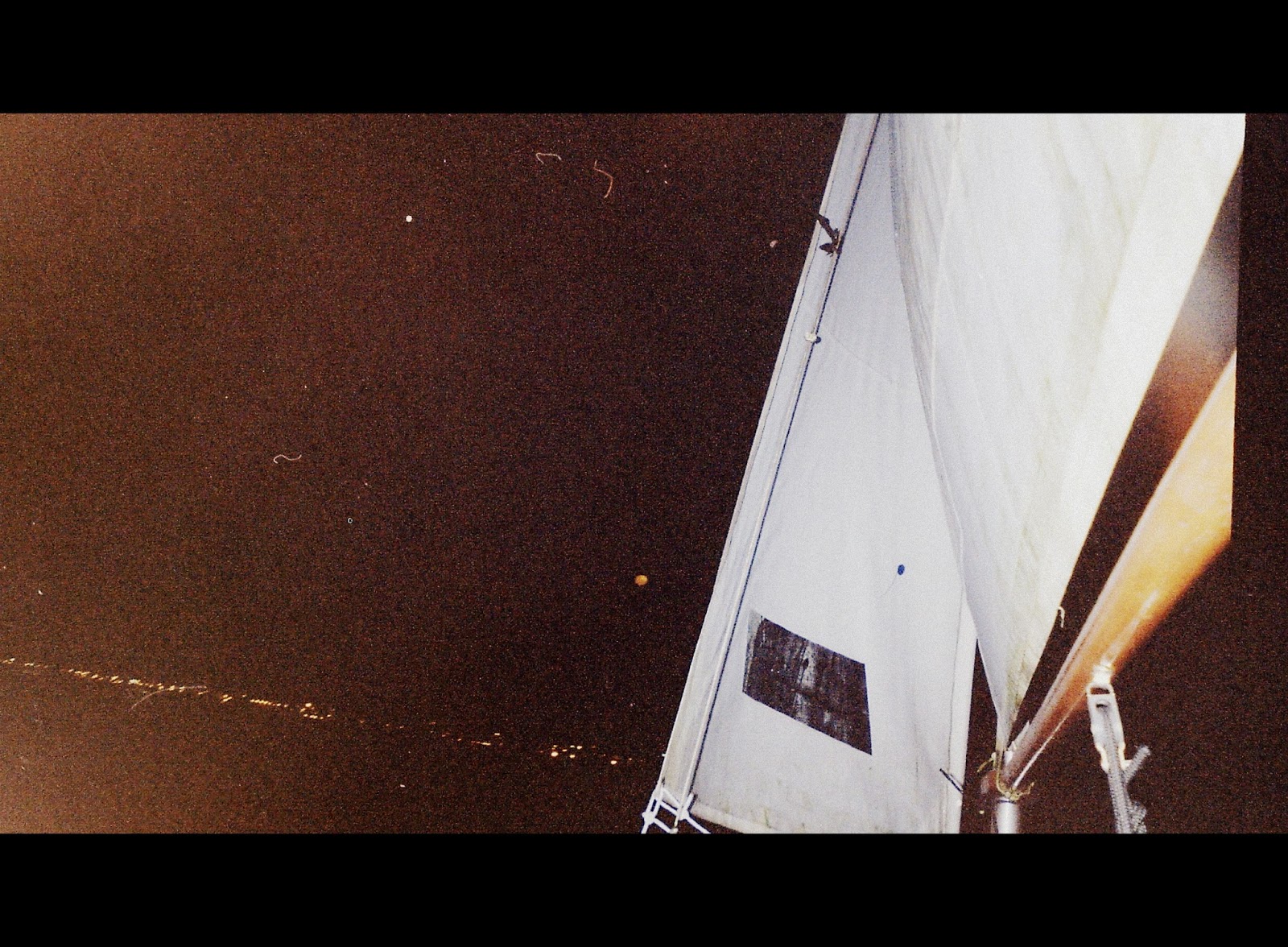
That day I went to the island San Lorenzo I had very little wind, so at the time of the return it took a lot of time and inevitably won the night. It was the first time I sailed at night in the trimaran for which I was not prepared because I did not have the regulatory lights for port and starboard etc. Needless to say, it was a very interesting experience as there was a full moon.
Monday, June 1, 2015
More testing of the sails
Sunday, May 31, 2015
Heading to the island san lorenzo
The boat is ready to sail to the island . I got an anchor just in case I need to disembark on the island.
Thursday, May 7, 2015
Navigation
The day after the launching came the long awaited day for me. I had a good windy day, mainly from the south-west, which was perfect for experimenting and doing different maneuvers with the Ananda.
I discovered that it is very fast and very stable at the same time, and in conditions of enough wind I was moving like a railroad, that means you fell very safe and confident with the boat. I explained that it was because I made some modifications in the fastening system of the "Amas" or floaters on port and starboard, instead of securing only with ropes and knots with the floats I used stainless steel plates with through bolts also made of stainless steel which canceled any kind of vibration or disturbance when the boat was sailing fast. Likewise, the "akas", that is to say, the crossbeams or wooden crossbeams that pass transversely through the boat and hold the floats were made with a half inch more thickness compared to the original plans. All these modifications added more weight to the trimaran but it was worth it.
The only difficulty I found was that it was very difficult to tack ahead if there was not enough speed and wind, so turning round was the best option. This problem was fixed later by adding a longer centerboard and a mizzen mast with its sail.
I discovered that it is very fast and very stable at the same time, and in conditions of enough wind I was moving like a railroad, that means you fell very safe and confident with the boat. I explained that it was because I made some modifications in the fastening system of the "Amas" or floaters on port and starboard, instead of securing only with ropes and knots with the floats I used stainless steel plates with through bolts also made of stainless steel which canceled any kind of vibration or disturbance when the boat was sailing fast. Likewise, the "akas", that is to say, the crossbeams or wooden crossbeams that pass transversely through the boat and hold the floats were made with a half inch more thickness compared to the original plans. All these modifications added more weight to the trimaran but it was worth it.
The only difficulty I found was that it was very difficult to tack ahead if there was not enough speed and wind, so turning round was the best option. This problem was fixed later by adding a longer centerboard and a mizzen mast with its sail.
Subscribe to:
Posts (Atom)
Paddling to the San lorenzo island in the new kayak
After some exhausting hours of paddling, I finally reach the island. Taking advantage of having taken my very old 35mm analog camera I ta...
-
After some exhausting hours of paddling, I finally reach the island. Taking advantage of having taken my very old 35mm analog camera I ta...
-
The camotal is a small strip of land between La Punta and San Lorenzo Island, it is said to be a remnant of the old port of Callao, whic...
-
The Ananda waiting for some renovations and necessary repairs, the first of which is to fix the bow that has some cracks and cracks resultin...